
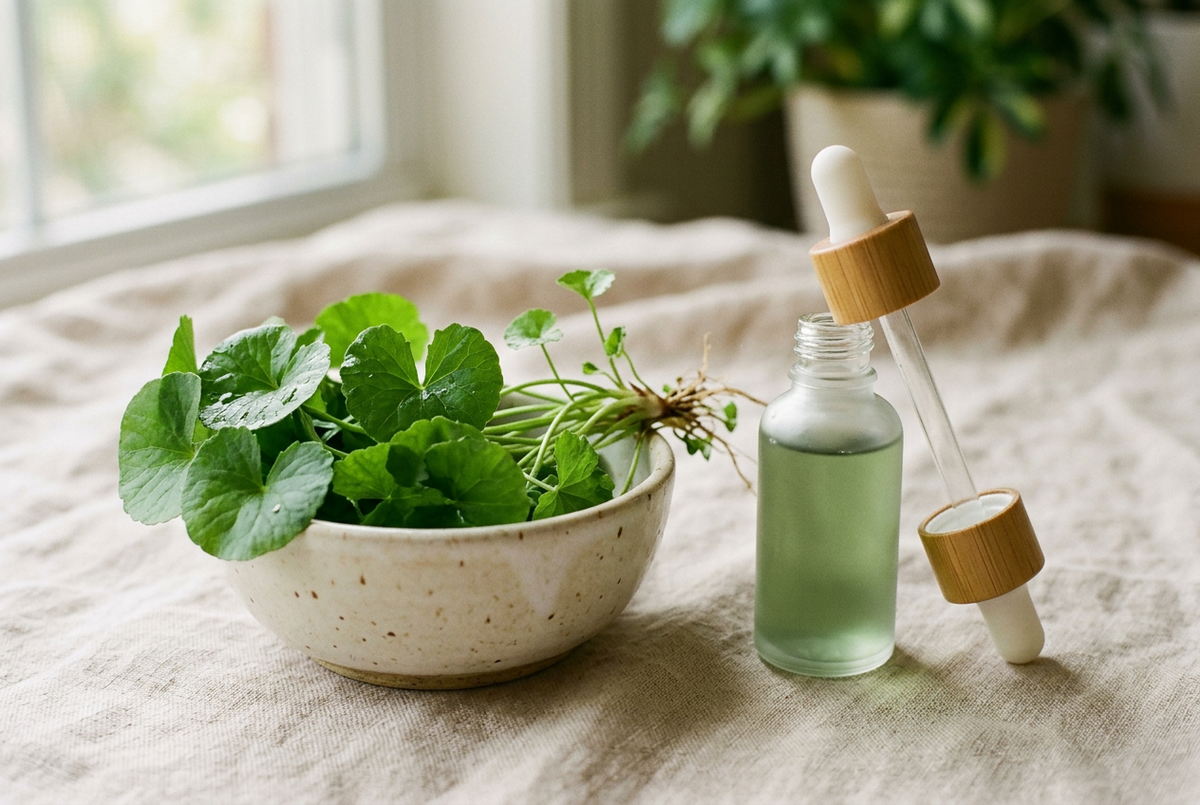
If you've looked at Korean skincare at all, you've probably seen the word centella, or cica, on a lot of labels. Here is what it is in plain English, and why it shows up in so many calming products.
What it is
Centella asiatica is a small leafy plant that grows in wet areas across Asia and other warm parts of the world. It has been used in traditional medicine for a very long time. In skincare you'll see it listed as centella asiatica extract, or as its main compounds: madecassoside, asiaticoside, madecassic acid and asiatic acid.
Cica is just a nickname, short for cicatrization, a French word connected to skin healing.
What it does for skin
Lab and small clinical studies suggest centella helps in a few gentle ways:
- It calms. It may help reduce redness and that hot, irritated feeling.
- It supports the skin barrier. It can help skin hold on to moisture, which matters more as we get older.
- It has antioxidant compounds. These help defend skin against everyday stress like pollution.
It is not a miracle and it won't erase wrinkles. Think of it as a kind friend for skin that feels stressed, dry or easily upset.
Who it's good for
Centella is usually very well tolerated, which makes it a nice choice if you have sensitive skin, if your skin gets red easily, or if you're starting a stronger active like a retinoid and want something soothing alongside it.
As with any new product, try it on a small patch of skin first, like behind your ear or along your jaw, for a few days. If you have a known plant allergy, check with your doctor.
How to use it
You'll find centella in toners, serums, creams and masks. Use it after cleansing and before moisturizer, morning or night. It plays well with almost everything, including hyaluronic acid, niacinamide and ceramides.
Simple, gentle and backed by real research. That is the kind of ingredient I love.
You're not behind. You're right on time.
